

Wheel Alignment in Austin & Round Rock, TX
If your car pulls to one side, your steering wheel sits crooked, or your tires are wearing on the edges, you need an alignment — not new tires. Total Auto Works performs four-wheel computerized alignments at both our Austin and Round Rock shops, and we hand you the before/after spec printout so you can see exactly what changed. Central Texas roads are hard on alignment: pothole season, parking-garage curbs, and the never-ending I-35 construction joints all knock toe and camber out of spec a little at a time.
What's included
- Four-wheel computerized alignment for cars, trucks, and SUVs
- Before/after spec printout with every alignment — see what we corrected
- Toe, camber, and caster adjusted to manufacturer specification
- Steering and suspension inspection included — worn parts make alignments temporary
- Recommended after new tires, suspension work, or any hard pothole or curb hit
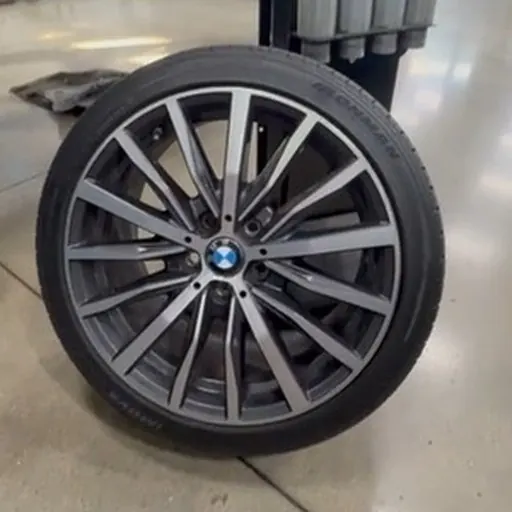
What alignment actually adjusts
Alignment sets the angles at which your wheels meet the road, and there are three that matter. Toe describes whether the wheels point slightly inward or outward relative to each other, and it is the angle most responsible for rapid tire wear when wrong. Camber describes the wheel's tilt from vertical when viewed from the front and affects how evenly the tread contacts the surface. Caster relates to steering geometry and influences straight-line stability and how the wheel returns to center. Manufacturers specify each within tight tolerances, and small deviations that are imperceptible to drive can produce very visible tire wear within a few thousand miles.
How alignment goes out
Rarely gradually, and almost never by itself. The usual cause is an impact — a pothole, a curb, a piece of road debris — hard enough to shift a component slightly without leaving any visible damage to the wheel or tire. Worn suspension components are the other common cause: a ball joint or bushing with play allows the geometry to move under load even when the static measurement looks acceptable. That is why an alignment on a car with worn suspension is money poorly spent; the numbers will be correct on the rack and wrong again on the road. Any component that locates a wheel should be inspected before the angles are adjusted.
The symptoms worth acting on
A vehicle pulling to one side on a flat road is the classic sign, though a steering wheel that sits off-center while the car tracks straight is just as indicative. Uneven tire wear is the expensive one — wear concentrated on one shoulder rather than distributed across the tread almost always means an angle is out of specification. Tires that feel scalloped or ragged to the touch across the tread blocks point the same way. A vibration alone is more often balance than alignment, which is a different and simpler correction.
Why it is a tire-budget decision
The reason alignment matters financially is that tires are expensive and a misaligned vehicle destroys them early. A quarter of a degree of incorrect toe is undetectable from the driver's seat and can remove a meaningful fraction of a tire's life. Because the wear is gradual and even-looking to a casual glance, most people discover it only when the tire is replaced and someone points out the pattern. Checking alignment after any significant impact, and when fitting new tires, is the cheap way to avoid paying for a set twice.
Frequently asked questions
How do I know if my car needs an alignment?
The classic signs: the car drifts or pulls on a flat road, the steering wheel is off-center when driving straight, or your tires show uneven wear on the inside or outside edges. Any one of those is worth a check — an alignment is far cheaper than a set of tires.
How much does a wheel alignment cost in Austin?
It depends on the vehicle and whether all four wheels are adjustable. Call either shop and we'll quote it in writing in about two minutes — no surprises when you pick the car up.
How often should I get an alignment?
Once a year is a good baseline for Austin and Round Rock driving, and always after new tires, suspension repairs, or a hard impact with a pothole or curb. If you commute on I-35 or TX-130 daily, the high-speed miles make correct alignment matter even more.
How do I know if my alignment is out?
A pull to one side on a flat road, a steering wheel that sits off-center while the car tracks straight, or tire wear concentrated on one shoulder are the common signs.
Do I need an alignment with new tires?
It is worth checking. Fitting a new set to a vehicle that is out of specification is a reliable way to wear them out early.
What knocks alignment out?
Usually an impact — a pothole, curb or debris — hard enough to move something slightly without visible damage. Worn suspension components are the other frequent cause.
Is a vibration an alignment problem?
More often it is wheel balance, which is a different and simpler correction. Alignment shows up as pulling and as uneven wear rather than as vibration.
Should suspension be inspected first?
Yes. Aligning a vehicle with worn components produces numbers that are correct on the rack and wrong again on the road.
How often should alignment be checked?
There is no fixed interval. Check it after any significant impact, when fitting new tires, or whenever you notice pulling or uneven wear.
Wheel Alignment by location
Other services we offer in Austin
Wheel Alignment by Make
We handle wheel alignment on every make we service — domestic, import and European. Pick yours for model-specific detail.
Areas We Serve
Both shops draw from across the north Austin metro. Find the drive from your side of town.
Ready to book wheel alignment?
Two Austin-area locations. Same-day service often available.