

Battery & Electrical Service in Austin & Round Rock, TX
Slow cranks, dim headlights, or a dead battery in the Texas heat? We test, replace, and repair every part of your charging and electrical system — for any make or model.
What's included
- Free battery testing with any service
- Battery replacement (most makes in stock)
- Alternator and starter testing and repair
- Parasitic draw and wiring diagnostics
- Headlight, taillight, and accessory wiring
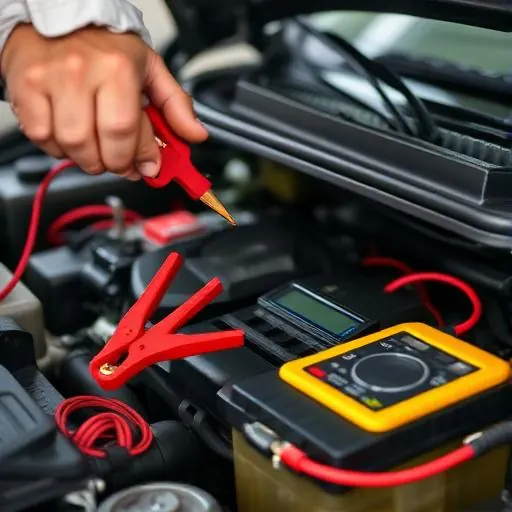
Heat, not cold, is what kills batteries in Texas
The popular image is a battery failing on a freezing morning, but heat is far more destructive. High under-hood temperatures accelerate the internal chemistry and evaporate electrolyte, permanently reducing capacity. The damage accumulates through summer and then reveals itself when the first cool weather asks slightly more of a battery that no longer has reserve. That is why so many batteries in this climate fail in autumn having shown no symptoms in August, and why three to five years is a realistic service life here rather than the five to seven common in milder places.
Three different failures that all look like a no-start
A weak battery generally cranks slowly, degrades over days, and responds to a jump start. A failing alternator is not replacing the charge you use while driving, so the car starts from a jump and then dies again miles later, often after a battery warning light or dimming headlights. A failing starter usually gives one click or silence while everything else works normally — bright lights, working radio. Because the symptom overlaps, the only reliable approach is to test the battery's actual capacity, the charging system's output under load, and the current draw on the starting circuit, and then replace what the measurements point at.
Parasitic drain: the fault that only shows up when you are not there
A vehicle that goes flat after sitting for a few days has something drawing current after everything should be asleep. Common culprits are lights that never switch off in a trunk or glovebox, aftermarket accessories wired to a permanently live feed, and modules that fail to enter sleep mode. Finding it means measuring the resting draw and then isolating circuits methodically until the number falls. It is patient work rather than a parts swap, and it is worth doing properly because the alternative is replacing batteries repeatedly while the real fault continues.
Modern charging systems are not simply an alternator
On many current vehicles the charging system is managed by the engine computer, varying output based on battery state, electrical load and even fuel economy strategy. Some use absorbed glass mat batteries that require the replacement to be registered to the vehicle so the charging strategy adapts correctly; skipping that step shortens the new battery's life. Start-stop systems place demands on batteries that ordinary units are not built for. The practical consequence is that fitting the physically correct battery is no longer sufficient on its own — it has to be the right specification, and on some vehicles the system needs telling.
Frequently asked questions
How long do car batteries last in Austin?
Texas heat is brutal on batteries — most last 3–4 years here, vs 5+ in cooler climates. Get yours tested every spring.
Can you replace my battery the same day?
Yes, in most cases. We stock common batteries and can install most replacements while you wait.
How long should a battery last here?
Three to five years is realistic in Central Texas. Sustained heat is the reason it sits at the lower end. Have it tested annually once it passes three years.
Can you test my battery and charging system?
Yes, and you get the actual measurements rather than a pass-fail, so you can decide whether to replace now or monitor it.
My car starts after a jump but dies later. What is that?
That pattern usually indicates a charging fault rather than a bad battery — the alternator is not replenishing what you use while driving.
What causes a car to go flat while parked?
A parasitic drain — something continuing to draw current after shutdown. It is found by measuring the resting draw and isolating circuits, not by guessing.
Does my new battery need to be registered to the car?
On many modern vehicles, yes, particularly those with AGM batteries or start-stop systems. Skipping it shortens the battery's life.
Do you work on European electrical systems?
Yes — all makes and models, domestic and import including European.
Can a bad battery damage the alternator?
It can. An alternator is designed to maintain a charged battery, not to repeatedly recharge a deeply discharged one. Running a failing battery for months makes the alternator work continuously at high output, which shortens its life — which is why replacing a dying battery promptly is cheaper than the alternative.
Battery & Electrical by location
Other services we offer in Austin
Battery & Electrical by Make
We handle battery & electrical on every make we service — domestic, import and European. Pick yours for model-specific detail.
Areas We Serve
Both shops draw from across the north Austin metro. Find the drive from your side of town.
Read more about this
Plain-English explanations of the symptoms and costs people ask us about most.
Ready to book battery & electrical?
Two Austin-area locations. Same-day service often available.